

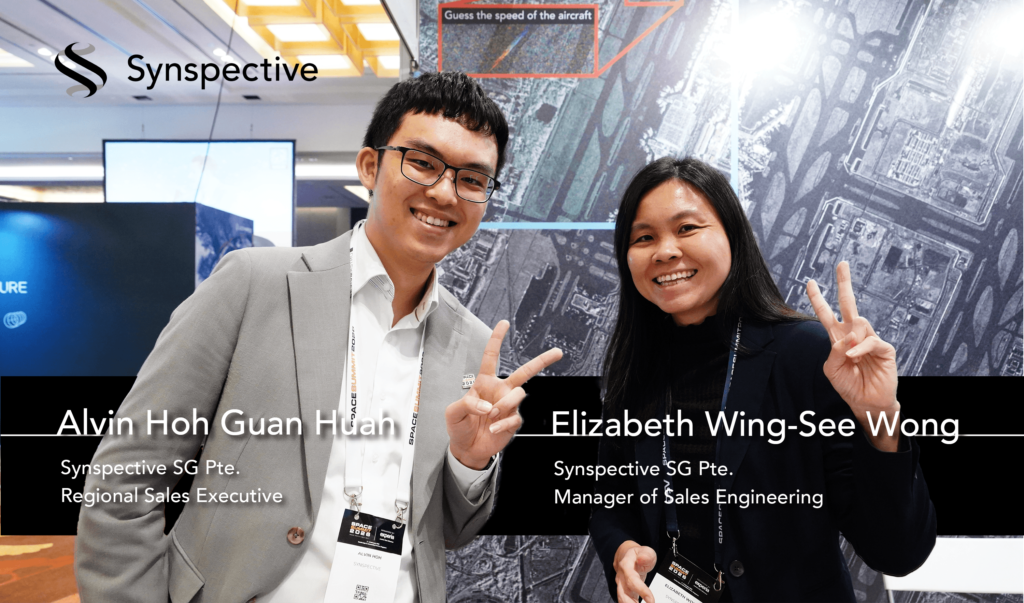
The Synspective Singapore office serves as a vital gateway for our activities across the Asia-Pacific (APAC) region. From sales strategy to technical support and disaster response, the team plays a unique role in translating our high-end Japanese engineering into localized solutions. We sat down with Alvin Hoh Guan Huah, Regional Sales Executive, and Elizabeth Wing-See Wong, Manager of Sales Engineering, to discuss their roles, the impact of SAR technology in Southeast Asia, and the “cultural translation” required for global success.
Driving Strategy and Building Ecosystems in APAC
— To start, could you both briefly introduce your roles and what you do at the Singapore office?
Alvin: I lead the sales and marketing strategy for Synspective’s solutions across a vast territory, including Oceania (Australia, New Zealand, and the Pacific Islands), Malaysia, Vietnam, and the commercial/civil government sector in South Korea. I joined Synspective in March of last year, coming from a background in the optical satellite industry with companies like Maxar. I see my role as “ecosystem building”—bridging the gap between complex satellite technology and earthbound solutions through workshops and international conferences.
Elizabeth: I lead a team of engineers who provide technical support for both pre-sales and post-sales activities. I’ve been with Synspective for about four years, and before this, I was a researcher using optical data at a Singapore research organization called CRISP. My team acts as the “technical arm”; we travel with the sales team to address deep technical questions, craft project proposals, and define technical specifications for our clients.
Serving as “Cultural Translators” Between Japan and the World
— Synspective is a Japanese company expanding globally. How does the Singapore team facilitate this transition?
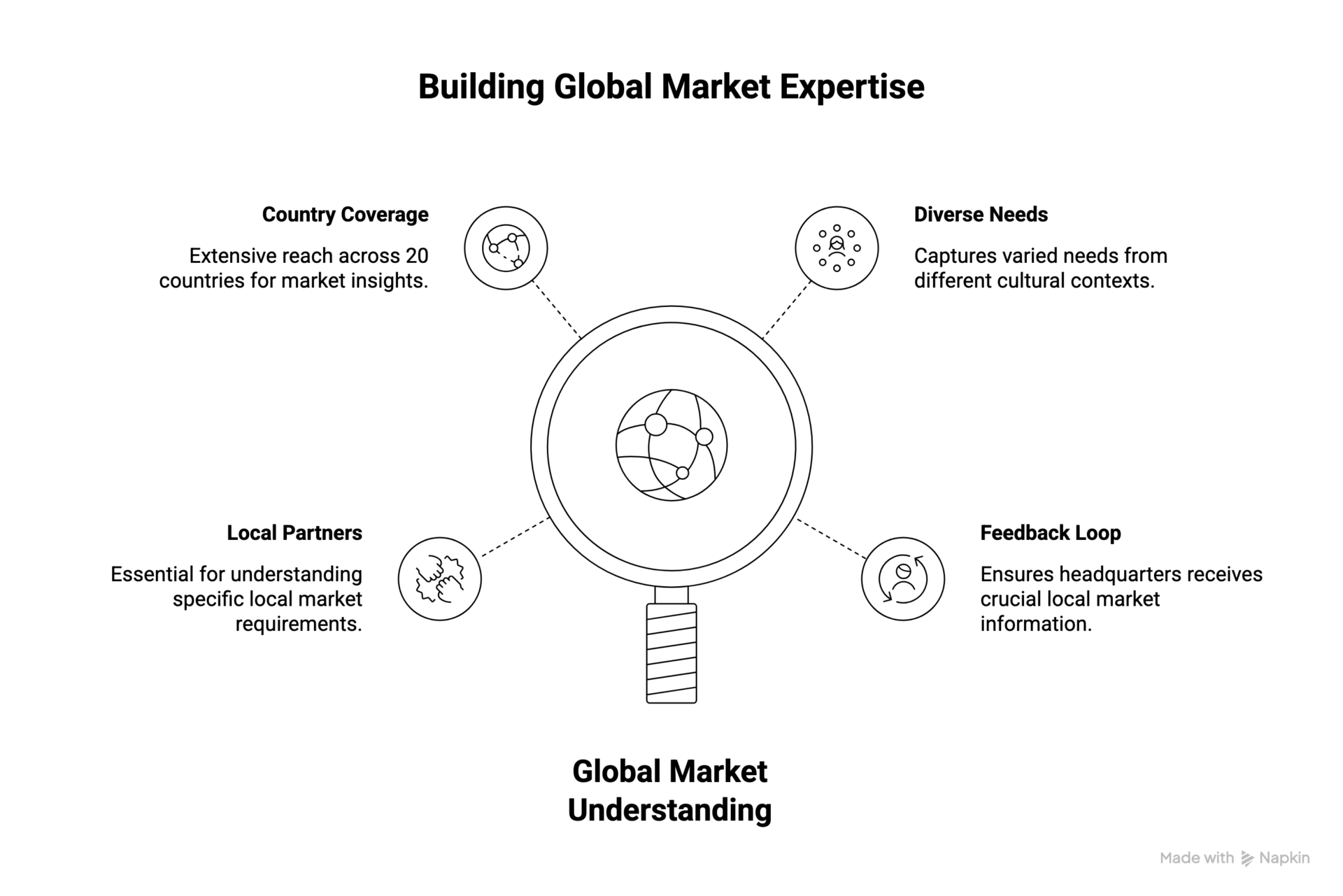
Alvin: We essentially act as “cultural translators”. The technological landscape in Japan is unique, and to succeed globally, we translate high-end Japanese engineering into solutions that resonate with international standards and local needs. We leverage our local knowledge of language, politics, and economics to provide our Tokyo headquarters with the context they need to ensure efficient communication and optimal agreement for every project.
Elizabeth: We also manage local partners in each country. These partners are crucial because they help us understand specific local requirements across the 20 countries we cover—including Australia, New Zealand, Indonesia, Philippines, Malaysia, Vietnam, Taiwan, Korea, Mongolia, Kazakhstan, Uzbekistan, Azerbaijan, India, Bangladesh, Nepal, Sri Lanka, Bhutan, Turkey, Singapore, and Thailand. We then feed these diverse needs back to headquarters.
Overcoming Environmental Challenges with SAR Technology
— What makes SAR technology particularly important for the Southeast Asian region?
Alvin: In regions like Southeast Asia, cloud cover and heavy rainfall are constant challenges for traditional optical satellites. SAR is a game-changer because it uses radar to see through clouds, smoke, and total darkness, enabling 24/7 monitoring.
Elizabeth: To put it in perspective, cloud cover in this region is present about 80-90% of the time. This means a high percentage of optical images are effectively discarded because they are obscured. SAR provides a reliable “eye in the sky” when other sensors are blinded.
Real-World Impact: Proving the Power of SAR
— Can you share specific success stories where Synspective’s technology made a difference during a crisis?
Alvin: A defining moment for me was our support for the Vietnamese government during severe thunderstorms and flooding last year. In disaster response, speed is everything. While many public satellites have revisit times of several days, our constellation allows for multiple revisits per day. Working with our partner, Vegacosmos, we provided urgent SAR tasking for flood monitoring. Providing near-real-time actionable data during a crisis demonstrates our commitment to regional resilience.
Elizabeth: We had a similar success in Thailand with our partner GISTDA. Our SAR images were actually featured on a national news channel to show the extent of a flooding event. You can see the coverage here: Thai News Segment. This incident really helped the Thai community recognize how SAR can be used effectively for flood monitoring and increased our brand recognition.
Navigating Growth and Knowledge Gaps
— What are some of the hurdles you face when introducing this technology to new markets?
Elizabeth: A significant challenge is that many clients and partners in Southeast Asia lack deep knowledge about SAR. They know the benefits, but they struggle to integrate it into current workflows because they are more familiar with optical imagery. To address this, we conduct frequent educational workshops and onboarding sessions to ensure everyone is on the same page.
Alvin: Internally, we also navigate different paces of business. While Japan often follows multi-step workflows, markets like Vietnam, Australia, and South Korea require immediate responses. We are constantly working with headquarters to find a balance and streamline our operational systems to match that global speed.
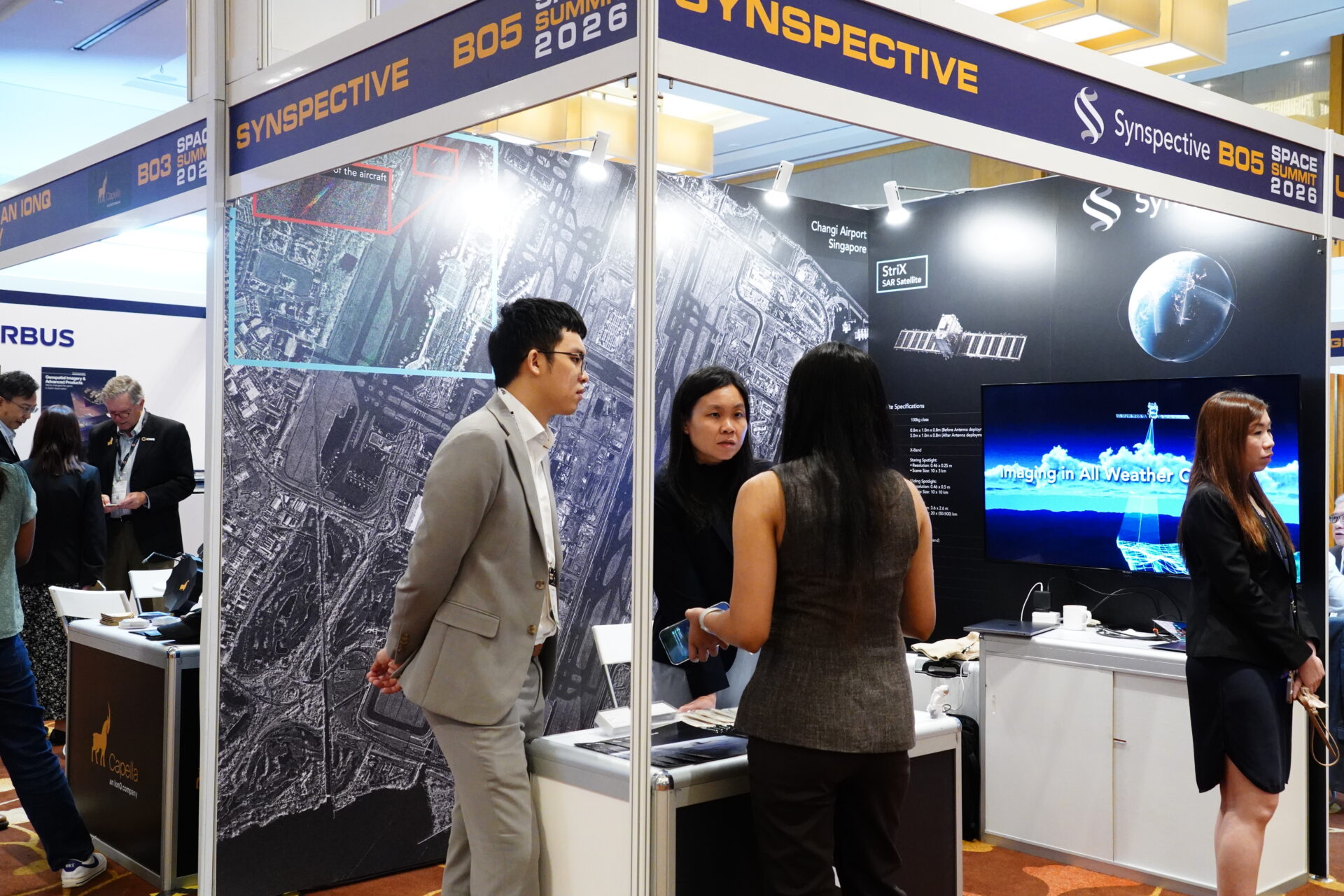 Space Summit Singapore 2026
Advice for Prospective Talent
— What advice would you give to someone looking to join a high-growth deep-tech firm like Synspective?
Alvin: Space is hard, but don’t worry, it’s not always rocket science (though sometimes it is!). My advice is to bring your passion. We aren’t just building satellites; we are creating a “learning world” where data informs better decisions for the planet.
Elizabeth: You don’t necessarily need a background in space to join; you can learn on the job. The Earth observation community is very friendly and tight-knit. If you have a big passion and are ready for a rewarding journey with a literal global impact, this is the place to be.