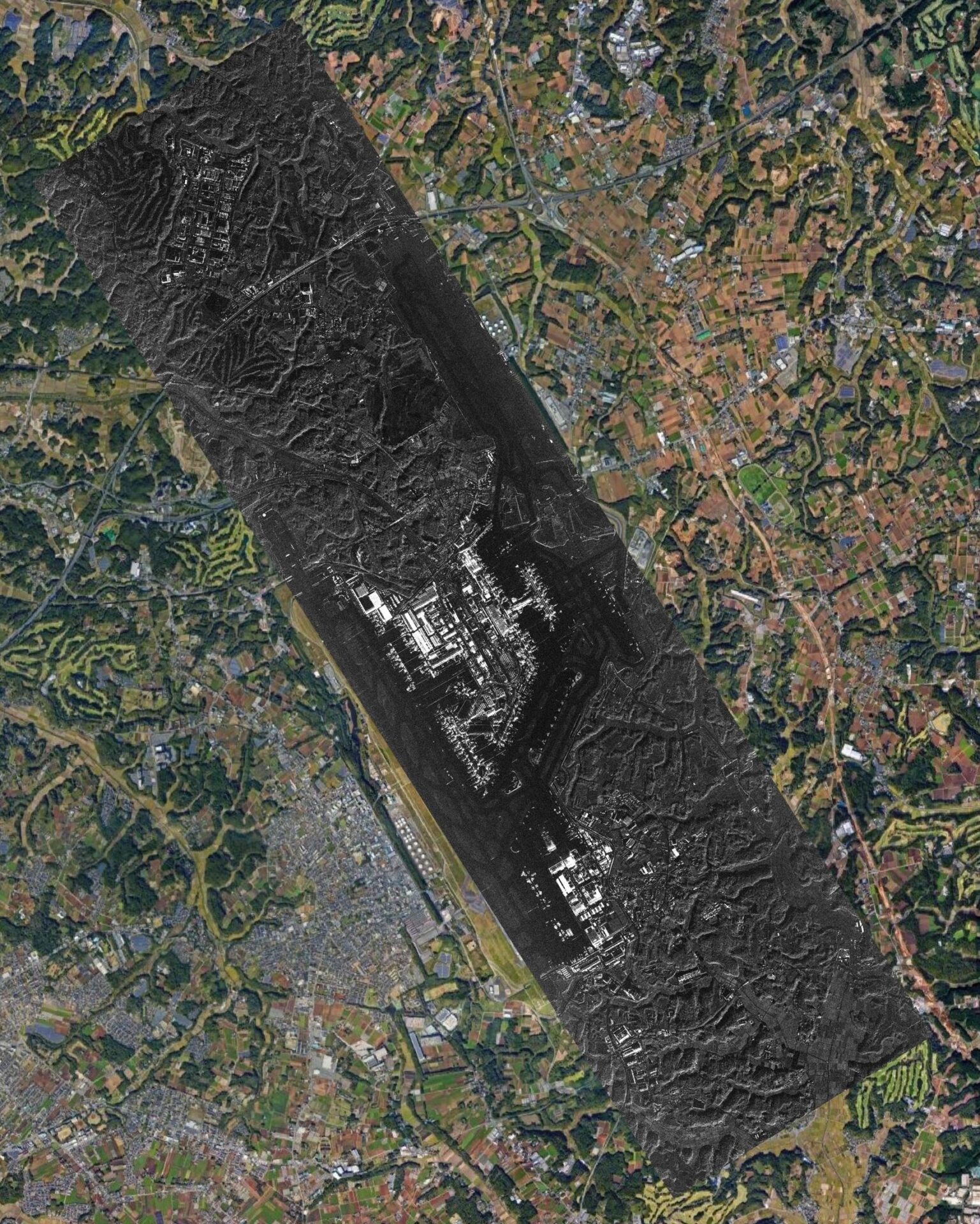
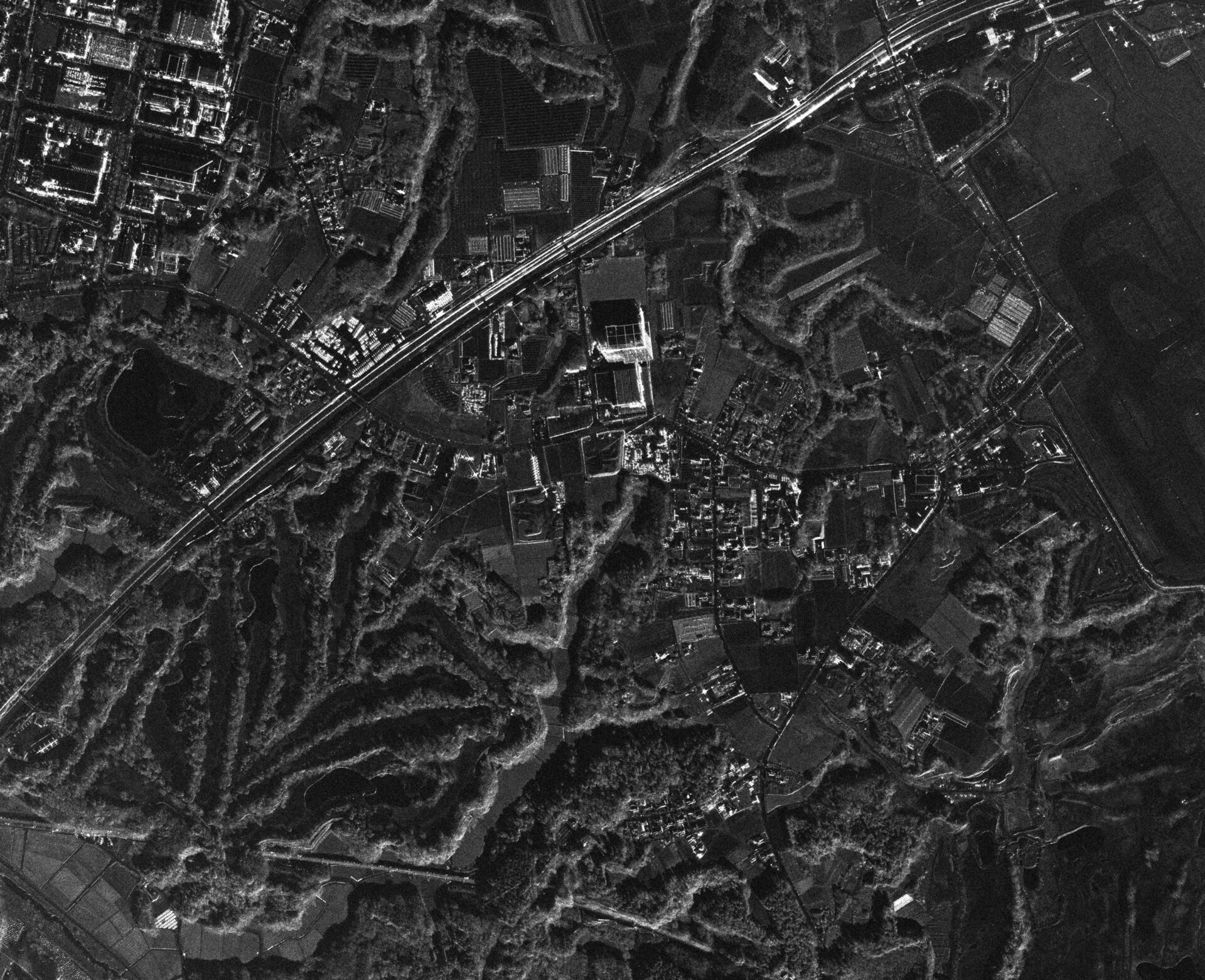
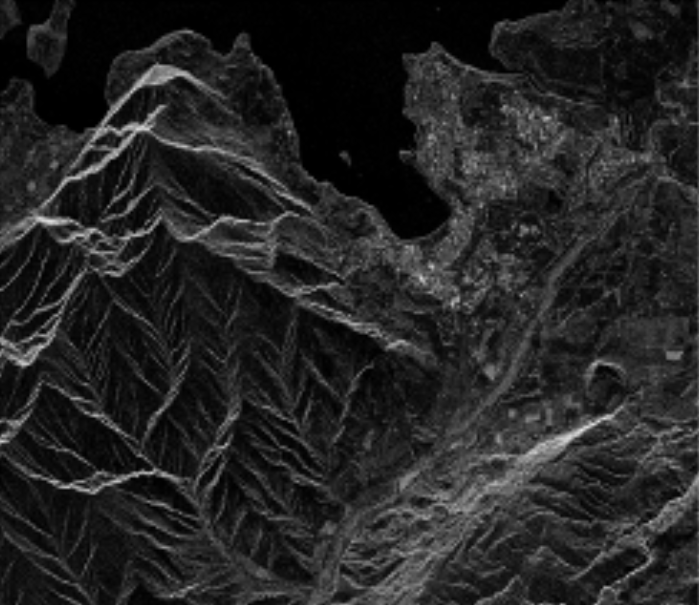
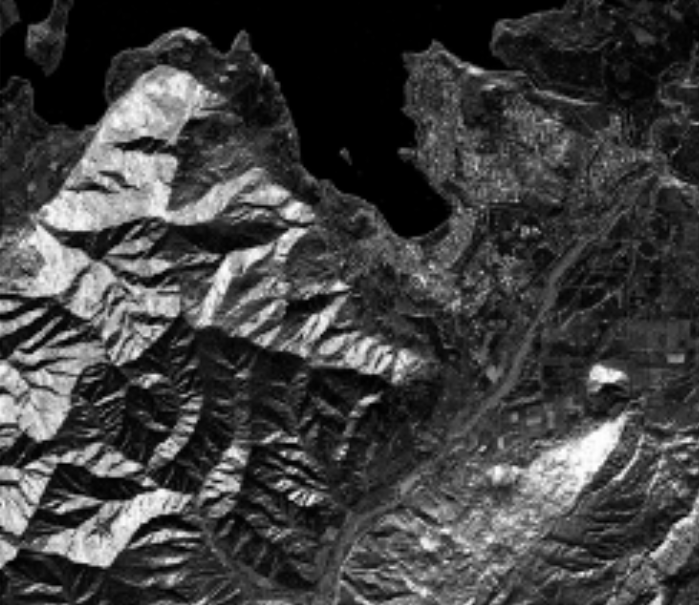
Our StriX satellites use Synthetic Aperture Radar (SAR) to observe and analyze the Earth’s surface down to sub-meter resolutions.
Satellite Orbit and Specifications
Our small SAR satellite StriX boasts a larger swath, lower noise and wider area than other satellites in its class. Our first Strix satellite was placed in orbit in 2020, with more satellites being added each year.
Operating at a nominal altitude of 500km or higher, StriX follows a sun-synchronous or inclined orbit typical of other Earth observation satellites and is capable of making daily visits to the same location. This visit frequency will only increase as our constellation grows in size.
Our StriX satellites emit a 9.65GHz (X-band) frequency microwave signal directed at a target on Earth. The amount of signal reflected (“backscatter”) gives a realistic image of the terrain and structural properties at the target location. This is known as a “synthetic aperture” because the moving satellite uses multiple signal captures to mimic the effect of placing one massive antenna in orbit.
Observation Modes
Our StriX satellites offer three observation modes: Stripmap, Sliding Spotlight and Staring Spotlight. The choice of mode reflects the priority placed on either area or resolution.
Stripmap Mode
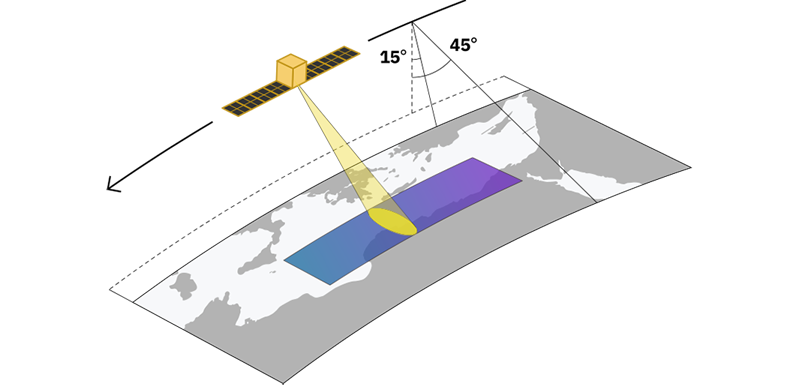
In the Stripmap mode, the center of the antenna beam moves in conjunction with the satellite at an approximately fixed off-nadir angle. While inside the antenna beam, the ground is illuminated with a sequence of electromagnetic waves at radiofrequency . The outcome of this imaging mode is a long swath image with a nominal slant range resolution of 1.8 meters and a nominal slant-azimuth resolution of 2.6 meters. Stripmap is the optimal mode for large-area capture.
Specifications of Stripmap Mode
| Observation mode | Stripmap |
| Nominal swath width [km] | 10-30 (Nominal20) |
| Nominal product length [km] | 50-70 |
| NESZ [dB] | -21.7 * |
| Azimusth S/A [dB] | 13.2 * |
| Range S/A [dB] | 26.0 * |
| Slant range resolution [m] | 1.8 |
| Ground range resolution [m] | 3.6 |
| Azimuth resolution [m] | 2.6 |
* The values reported in this table refer to latest expected performance of StriX satellites
Sliding Spotlight Mode
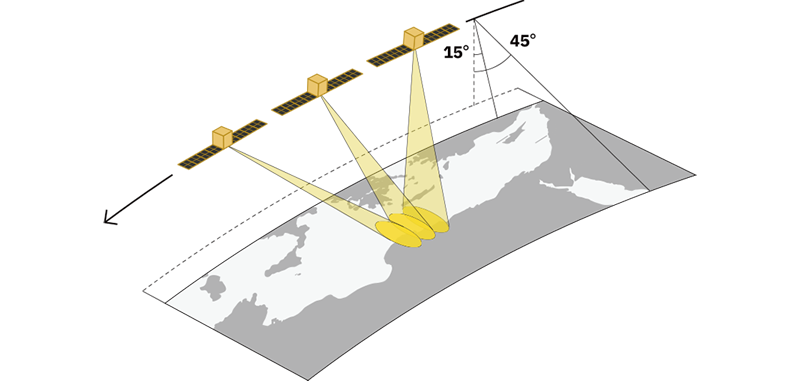
In this mode, the antenna beam is steered during data acquisition to allow a longer observation of a selected area. Because the antenna beam moves at a slower rate, more data is collected. Sliding Spotlight modes are available; one has 0.9 m ground range and 0.9 m azimuth resolution (Sliding Spotlight 1), whereas the other has 0.46 m ground range resolution and 0.5 m azimuth resolution (Sliding Spotlight 2).
Specifications of Sliding Spotlight Mode
| Modes | Sliding Spotlight 1 | Sliding Spotlight 2 |
| Nominal swath width [km] | 10 *1 | |
| Nominal product length [km] | 10 | |
| NESZ [dB] | -15.7 *2,*3 | -15.4 *2,*3 |
| Azimuth S/A (ASAR) [dB] | 20.2 *2,*3 | 28.9 *2,*3 |
| Range S/A (RSAR) [dB] | 23.5 *2,*3 | 16.5 *2,*3 |
| Slant range resolution [m] | 0.5 | 0.23 |
| Ground range resolution [m] | 0.9 *2 | 0.46 *2 |
| Azimuth resolution [m] | 0.9 | 0.5 |
*2. Analysis value at an off nadir angle of 30 degree
*3. The values reported in this table refer to the lowest expected performance of StriX satellites
Staring Spotlight Mode
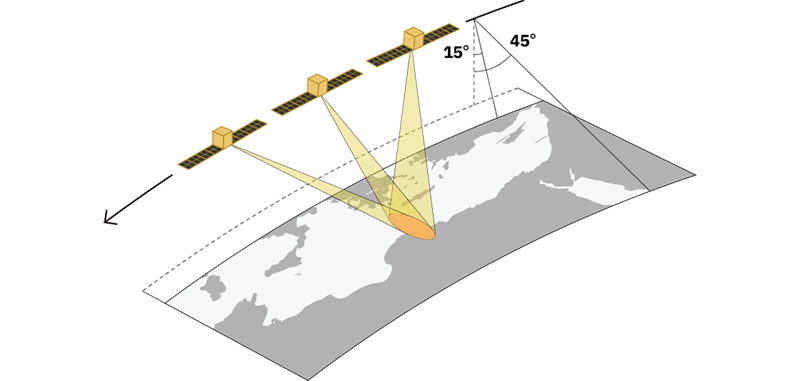
Similar to Sliding Spotlight mode, in Staring Spotlight mode, the antenna beam is steered mechanically throughout the data acquisition. However, in Staring Spotlight mode, the rotation center is on the Earth’s surface, allowing the scene’s area to be concentrated on a smaller area. As a result, Staring Spotlight mode provides a finer azimuth resolution. Five different Staring Spotlight modes are available, consisting of combinations of the chirp bandwidth and observation duration. “Staring Spotlight 4” has the finest range and azimuth resolution. The newly added “Spotlight Enhanced” is multilooked with 3 looks in the azimuth direction to reduce speckle noise, and its resolution is made equivalent to Staring Spotlight 3.
Specifications of Staring Spotlight Mode
| Observation mode | Staring Spotlight 1 | Staring Spotlight 2 |
| Nominal swath width [km] | 10 *1 | |
| Nominal product length [km] | 3 | |
| NESZ[dB] | -17.4 *2,*3 | |
| Azimusth S/A [dB] | 20.2 *2,*3 | |
| Range S/A [dB] | 23.5 *2,*3 | |
| Slant range resolution [m] | 0.5 | |
| Ground range resolution [m] | 0.9 *2 | |
| Azimuth resolution [m] | 0.5 | 0.25 |
| Observation mode | Staring Spotlight 3 | Staring Spotlight 4 |
| Nominal swath width [km] | 10 *1 | |
| Nominal product length [km] | 3 | |
| NESZ[dB] | -17.1 *2,*3 | |
| Azimusth S/A [dB] | 30.4 *2,*3 | |
| Range S/A [dB] | 16.5 *2,*3 | |
| Slant range resolution [m] | 0.23 | |
| Ground range resolution [m] | 0.46 *2 | |
| Azimuth resolution [m] | 0.5 | 0.25 |
| Observation mode | Spotlight Enhanced |
| Nominal swath width [km] | 10 *1 |
| Nominal product length [km] | 3 |
| NESZ[dB] | -17.1 *2,*3 |
| Azimusth S/A [dB] | 30.4 *2,*3 |
| Range S/A [dB] | 16.5 *2,*3 |
| Slant range resolution [m] | NA *4 |
| Ground range resolution [m] | 0.46 *2 |
| Azimuth resolution [m] | 0.5 *5 |
*1 This may vary depending on the observation condition such as offnadir
*2 This is an analysis value at an offnadir angle of 30 degree
*3 The values reported in this table refer to the lowest expected performance of StriX satellites
*4 For Spotlight Enhanced, only Ground Range Detectes (GRD) products are available. Thus, the slant range resolution is noted as Not Applicable (NA).
*5 This resolution is after multilooked by 3 looks