

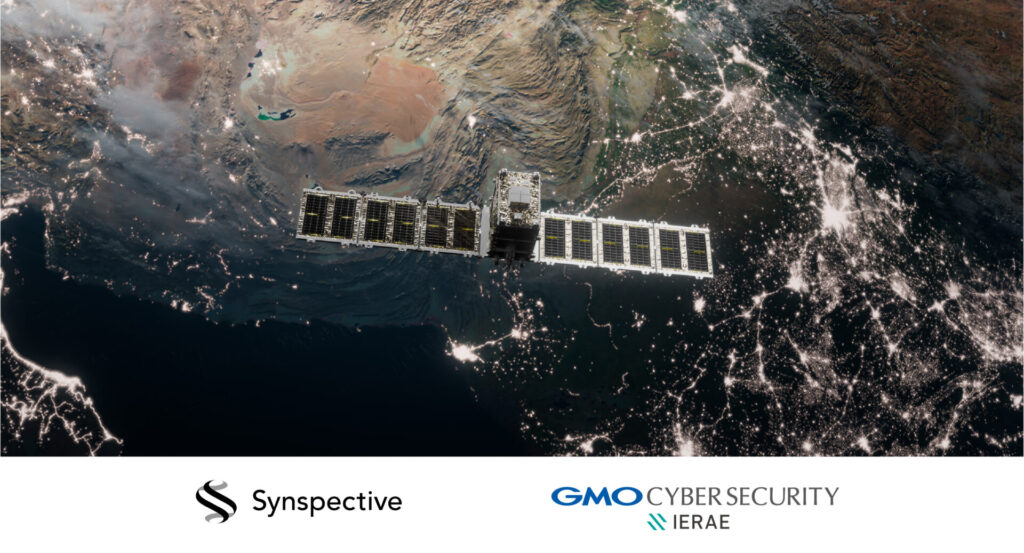
Synspective Inc., a leading provider of Synthetic Aperture Radar (SAR) satellite data and analytics solutions, is pleased to announce the launch of a joint research project with GMO Cybersecurity by Ierae to strengthen cybersecurity for satellite systems.
In recent years, the launch of small satellites and the private sector’s utilization of space data have expanded rapidly. According to the World Economic Forum’s forecast for the space industry market size, the market is expected to grow significantly, from $630 billion in 2023 to approximately $1.2 trillion in 2030 and approximately $1.8 trillion in 2035.*
*Source: World Economic Forum, “Space: The $1.8 Trillion Opportunity for Global Economic Growth” (April 2024). https://www3.weforum.org/docs/WEF_Space_2024.pdf
Alongside this expansion of the space industry, the rapid growth of small satellite launches and the private-sector use of space data has been accompanied by an increasing need for cybersecurity measures to protect small satellite constellations from attacks. Small satellites play an essential role in critical infrastructure such as communications and Earth observation, meaning their security is critical to national security and economic activity.
Moreover, as small satellite technology continues to advance, systems operating in the unique environment of space face distinct threat structures compared to conventional IT systems. This necessitates the development of new defensive methods grounded in specialized knowledge.
Purpose of the Joint Research and Initiatives
This collaboration aims to enhance the security of small satellite systems by combining Synspective’s expertise in developing small SAR satellite constellations with GMO Cybersecurity’s expertise in security testing and threat analysis. The joint research will focus on the following main areas:
1. Identification of potential threats and risks in satellite systems (Threat Analysis)
Analyzing potential threats to satellites based on the characteristics of the space environment and satellite functionalities, and identifying system-level risks.
2. Development of satellite-specific security testing methodologies (Development of Countermeasure Methods)
For each identified risk, the team will develop practical and reproducible countermeasures, along with evaluation processes and test scenarios to verify their effectiveness.
Through these efforts, the research aims to establish standardized methods for security evaluation in future satellite design and development. Synspective and GMO Cybersecurity will apply the research findings to future satellite projects, contributing to cybersecurity practices in the space industry.
Comment from Yusuke Koide, Manager of Security and IT, Corporate Administration Dept., Synspective Inc.
We are delighted to engage in joint research with a company possessing world-class cybersecurity expertise. While the importance of the space industry continues to grow across social infrastructure and national security, it also faces unique physical and cyber challenges distinct from those on Earth. Recognizing these issues, Synspective has been strengthening its cybersecurity measures from an early stage. Through this collaboration, we aim to further advance security technologies for small satellites, enhance the safety and reliability of space systems, and continue delivering lasting value to the space industry and society.
Comment from Kosuke Ito, Executive Officer, Global Strategy Department, GMO Cybersecurity by Ierae
Satellite services have already become a vital part of the world’s social infrastructure, and ensuring its security is an urgent challenge. We are grateful for the opportunity to work together with Synspective to address this important issue. By applying our advanced hacking technologies and expertise, developed through years of work with automobiles, IoT devices, and drones, to satellite systems, we aim to establish satellite-specific threat models and practical testing methodologies. We believe this collaboration is a highly meaningful step forward, not only in strengthening the resilience of satellite systems but also in advancing a safer, more sustainable future for space utilization and security.